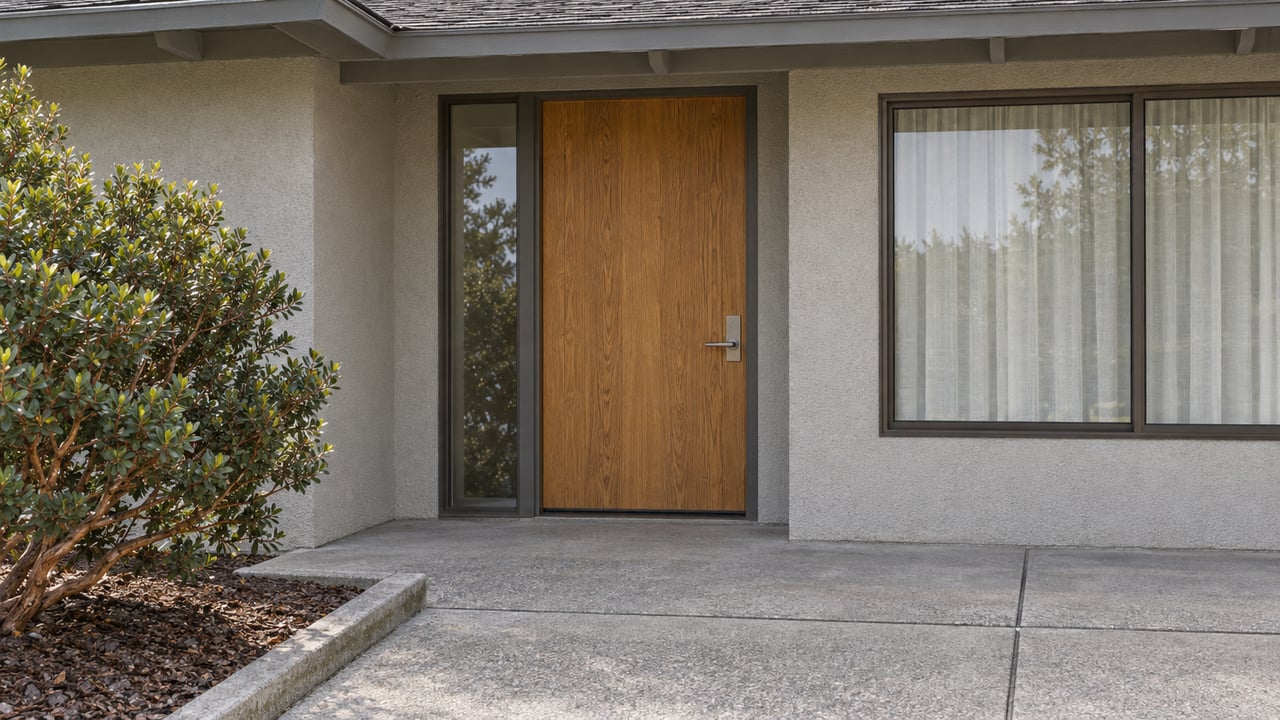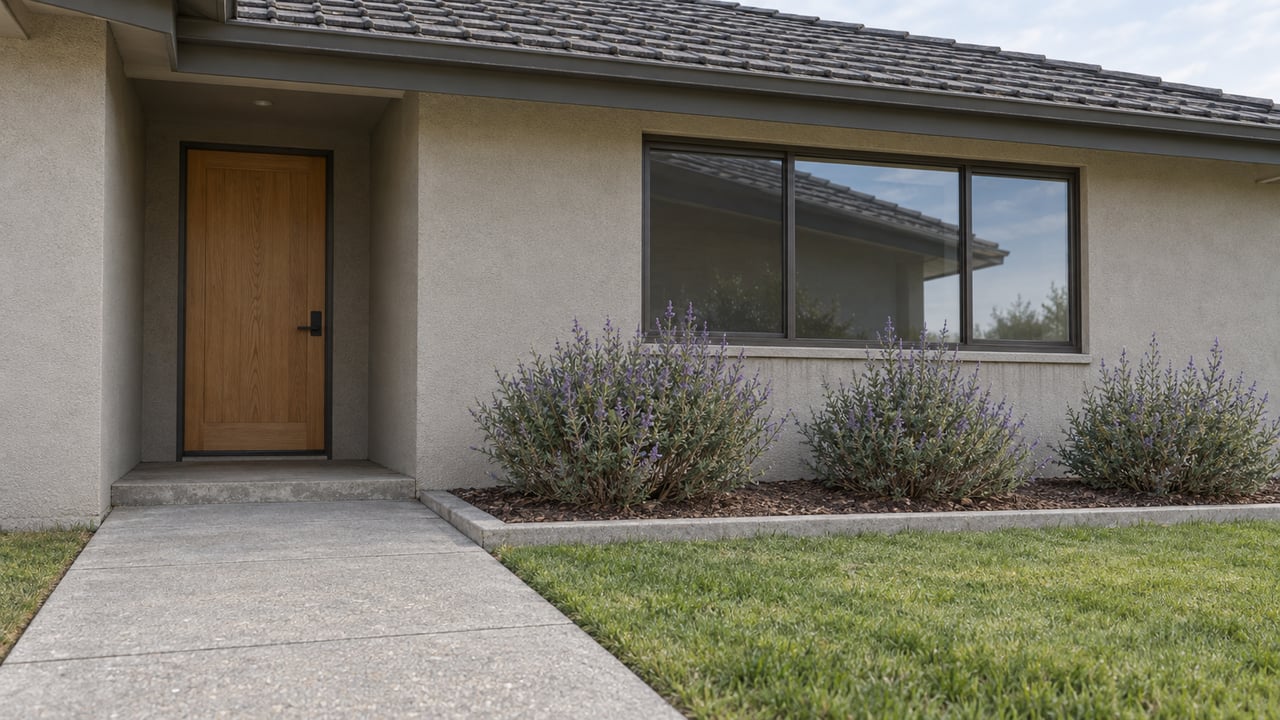
Two houses in Governor Village can look like they came from the same architect's drawing table, and they may well have. One owner wants to repaint in a new color and replace the fence. Whether that owner needs approval from the El Dorado Hills Community Services District before work starts depends on which recorded tract unit the lot sits in.
The CSD's own Enforcement Authority Table, updated September 25, 2026, sends Governors Units 1–2 and 4–11 through CSD design review. It lists one exception with a short label: "Governors 3 (No DRC)." For a buyer who plans to update a 1960s house, that one line can change the timeline, the fees, and how much freedom the owner has over the exterior.
A village planned in pieces
Governor Village is where El Dorado Hills began. The recorded plat for Unit 3 was filed May 25, 1961. The Eichler Network's history of the area puts the community's first home sales in 1962. It credits the first houses to Anshen and Allen, the San Francisco firm best known for its work with developer Joe Eichler. Victor Gruen Associates did the overall layout. According to that account, Governor Village got a wider range of modern models than nearby Park Village, including two-story designs and duplexes. Some lots went to other builders for custom homes. The Eichler Network piece shows one of those two-story Anshen and Allen designs on Stanford Lane.
The original plan made each village distinct, and the paperwork followed suit. El Dorado County recorded Governor Village in numbered units over roughly a decade. Unit 5 improvements were reported complete in 1970, and the county was handling an easement for Unit 6 in 1973. Each unit got its own declaration of restrictions. The CSD's CC&Rs-per-village page lists several Governor units separately, plus Governors West and Governors Duplexes as their own entries. Because the rules were written unit by unit, they could also be changed unit by unit.
Two units, two rulebooks
Put the Unit 1 and Unit 3 declarations side by side and the gap is plain.
| Topic | Governor Village Unit 1 | Governor Village Unit 3, lots 51–130 |
|---|---|---|
| Design approval | Architectural committee approval required before a building is erected, placed, or externally altered | Section 18 says no design committee exists, and no CSD employee may approve plans, require inspections, or collect fees for that purpose |
| Colors and materials | Plans, specs, and color scheme go to the committee. The original text sets roof pitch and materials and restricts vivid primary roof colors | "Solely the choice of the property owner," with no uniform standard |
| Fences, pools, landscaping | Committee reviews location, height, materials, design, color, and safety | County building plan approval required for fences, walls, and permanent structures |
| Boats, trailers, RVs | Behind the street setback line and a suitable fence, per a 2008 amendment | Behind the street setback line and a suitable solid six-foot fence |
| Changing the rules | Majority of then-owners records an instrument | Owners of 50% or more of the lots record a statement |
The Unit 1 declaration also includes a time rule. Committee approval or disapproval has to be in writing, and if the committee fails to act within 30 days, the plans are deemed approved. The Unit 1 setback figures are hard to read in the CSD's scanned copy. Anyone relying on them should get a clean recorded copy rather than trust the scan.
How Unit 3 wrote itself out of review
Unit 3's current rules come from an amended declaration recorded with El Dorado County on July 8, 2003, as document DOC-2003-0067617. It covers lots 51 through 130. The amendment removed the design approval step. Section 18 states that no design or architectural committee is established for Unit 3, and that no committee, CSD employee, or representative is authorized to approve or disapprove improvement plans.
The amendment did not remove every restriction. Unit 3 still limits houses to two stories and requires at least 1,300 square feet of floor area, not counting open porches, garages, and outbuildings. Structures have to meet El Dorado County setback requirements. Front yards can't be paved except for sidewalks and driveways. Trash containers have to stay out of street view except on pickup days. Boats, personal watercraft, trailers, motor homes, and inoperable vehicles have to sit behind the street setback line and a solid six-foot fence. The same screening applies to storage. Approval of building plans, fences, and walls still happens, but at the county rather than the CSD.
Unit 3's restrictions renew automatically in 10-year periods unless owners of 50% or more of its lots record a statement to amend or terminate them. The 2003 change shows that this mechanism has actually been used. Owners in a neighboring unit could, in principle, use their own declaration's amendment clause the same way.
What review looks like in the other units
In Units 1–2 and 4–11, the CSD handles design review. The district's Design Review page says exterior improvements generally need an application, supporting documents, fees, and approval before work begins. Its examples include exterior paint, roofing, fences, solar, tree work, landscaping, pools, retaining walls, remodels, and additions. It also tells owners to check their own CC&Rs to see what applies to their property.
The district's posted fee schedule:
- Solar: $50
- Property improvement: $100
- Remodel within the footprint, no roofline change: $200
- Pool: $250
- Work outside the footprint, a roofline change, or a shed or enclosed room over 120 square feet: $425
- New home: $1,100
- Appeal: $65
- Starting work before approval: $75
The fees are small next to the cost of a remodel. The schedule matters more. The committee meets in person on most Tuesdays at 8 a.m. Complete applications and payment are due by 5 p.m. the Tuesday before to be considered for that agenda. The CSD says applicants get a decision within 30 days of first submission, minutes go out by email within 48 hours of a meeting, and approvals expire after one year. A buyer planning a remodel-then-sell project in Units 1–2 or 4–11 should build that cycle into the contractor schedule. Lots 51–130 in Unit 3 don't go through it.
Who enforces any of this
In most Governor Village units, the body enforcing the CC&Rs is a public district. Any separate association or assessment is a parcel-specific question. In 1983, El Dorado Hills voters passed Measure B, which gave the CSD authority to enforce CC&Rs and approved an assessment of up to $10 per parcel per year to pay for it. The district enforces about two-thirds of the more than 104 sets of CC&Rs in El Dorado Hills. The CSD's page gives that $10 figure as a cap, not as the amount currently levied.
The CSD also describes limits on enforcement. Because of the volume of violations, its board has set new enforcement priorities. Staff follow up only on cases that can be seen from the street and do not enter homes or back yards. Under that policy, District follow-up focuses on conditions visible from the street, such as fences, front yards, exterior color, and where a boat trailer is parked. The recorded restrictions still apply to the entire lot.
The cityhood question hanging over the CSD
El Dorado Hills is in the middle of an incorporation process, which raises the question of who would enforce these rules under a new city. The CSD board started the process on May 1, 2025. Village Life reported that the board approved the environmental document on September 10, 2026. El Dorado LAFCO received the final application materials on September 14, 2026 and deemed the application complete. It has not yet approved or denied incorporation. Cityhood is not on the county's posted list of local measures for the November 3, 2026 election.
In a February 25, 2026 memo to LAFCO, the district proposed that the CSD survive incorporation as a subsidiary district, keep enforcing CC&Rs, and keep CC&R enforcement revenue out of the revenue transferred to a new city. That is a proposal, not final LAFCO terms, and the documents reviewed don't say how the Design Review Committee itself would be governed afterward. The recorded declarations stay in place either way, Unit 3's included. The open question is which agency would review plans in the units that still require review.
Why this matters at today's prices
Older houses in established El Dorado Hills villages are often bought with updates in mind, and the cost of those updates now carries more weight in the purchase math. Across El Dorado County, the C.A.R. August 2026 sales report put the median sold price for existing single-family homes at $690,000, up 1.5% from August 2025. Sales volume fell 7.0% over the same period, and median time on market was 34 days. Those are county figures. No reliable El Dorado Hills-only or Governor Village-only figure was available from a non-portal source. In a market where prices are rising only modestly, the post-closing renovation plan carries more of a buyer's return. In Governor Village, the recorded tract unit helps decide how quickly that plan can start.
Frequently Asked Questions
How do I find out which Governor Village unit a house is in? The unit comes from the recorded subdivision map and the lot's legal description. The CSD hosts each unit's CC&Rs on its per-village page, and the county keeps parcel records. Matching the lot's legal description to the unit's recorded map shows which declaration applies.
Does "No DRC" mean a Unit 3 project needs no approval at all? No. The Unit 3 declaration still requires El Dorado County to approve building plans, specifications, and plot plans in writing before buildings, fences, walls, or other permanent structures go up or are altered.
Is there a park in the neighborhood? Yes. Governor Park sits at 905 Governor Drive at Merriam Lane, three blocks from El Dorado Hills Boulevard.
Whether you're buying a Governor Village house with plans for a new roofline or getting one ready to sell, knowing which recorded unit it sits in tells you who reviews the work and how long that review takes. Darya Ghomeshi can pull the declaration for your lot, map the review timeline against your renovation and listing plans, and sequence the steps. Request a complimentary market consultation.
This article is general information, not legal, tax or financial advice. Consult a qualified professional about your situation.