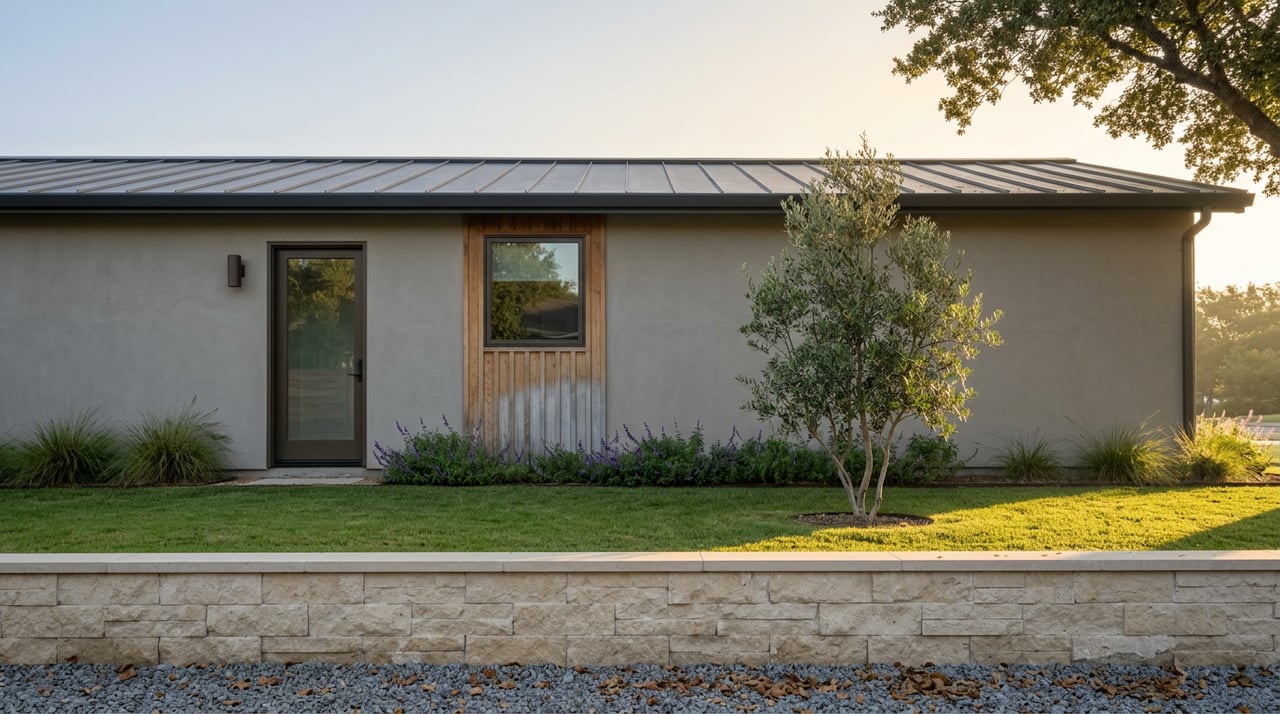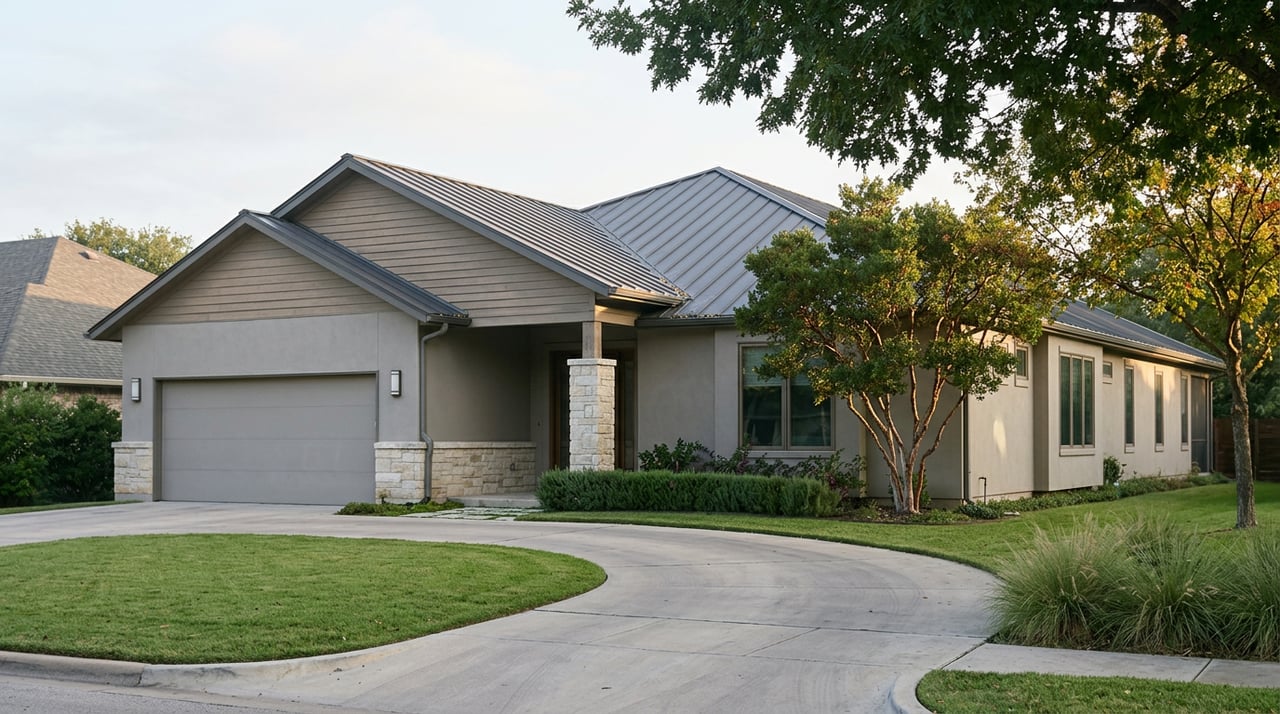
Pull up two listings side by side this fall. One sits on Saint Andrews Drive, a 1987-built three-bedroom running about 1,650 square feet, priced in the $700,000s. The other sits in Lower Serrano, similar square footage, similar bedroom count, priced somewhere north of $1.3 million. A buyer touring both in the same afternoon will do what most buyers do: chalk up the difference to finishes, lot size, maybe the golf course view. That's the wrong math. The bigger gap between those two numbers isn't sitting in the walls. It's sitting in a line item most people don't read until escrow, the special tax assessment known as Mello-Roos.
This matters because St. Andrews Village and Serrano represent two different eras of how El Dorado Hills financed itself, and that history still shows up on every property tax bill in both neighborhoods today.
The tax line that isn't on the flyer
Mello-Roos is shorthand for a Community Facilities District, a special tax that California cities and counties use to pay for infrastructure, roads, sewer lines, parks, sometimes school facilities, before the tax base from new rooftops has caught up to the cost of building them. The district issues bonds, then collects an annual special tax on top of the standard 1% property tax rate to pay those bonds down.
It shows up as its own line on the county tax bill, separate from HOA dues and separate from the base property tax. Depending on the specific district and parcel, that line can add anywhere from roughly $200 to more than $500 a month. In some newer El Dorado Hills tracts, the combined effective tax rate, base plus special tax, can climb past 1.5% to 1.8%, according to a cost breakdown published by Onyx Real Estate. None of that appears in the list price. All of it appears in the monthly payment.
Why St. Andrews never got the bill
St. Andrews Village is one of El Dorado Hills' original pockets, built out mostly between the 1960s and 1980s, tucked into a small northwest cluster ringed by Fairchild, Crown, Governors Village, and Stonegate. Community Facilities Districts didn't become the standard financing tool for California subdivisions until the early 1990s. Neighborhoods built before that window simply predate the mechanism. Their roads, sewer lines, and schools were paid for the old way, through developer improvement bonds and standard property taxes, and once those obligations were retired, they stayed retired.
That's the practical reason St. Andrews, along with Governors Village and Ridgeview a few streets over, tends to carry no HOA and no Mello-Roos tax at all. It isn't a discount anyone negotiated. It's a neighborhood that finished paying off its own construction decades ago and was never enrolled in the newer financing structure to begin with.
What Serrano's buyers are actually financing
Serrano tells the opposite story. Ground broke there around 1995, squarely inside the CFD era, and the community was financed the way most large master-planned developments in California are financed now: through bonds repaid by a special tax on every parcel inside the district. County disclosure records show at least two separate special tax programs tied to Serrano, one funding roads, parks, and community infrastructure, another tied to school facilities. HOA dues on top of that run roughly $210 to $250 a month for most Serrano villages, covering gate security, common-area landscaping, and the trail network. None of it is hidden. All of it is easy to miss if you're only comparing sale prices.
Here's the detail that changes the calculation for anyone doing long-term math: those special taxes aren't permanent. County records show Serrano's original 1992-1 Community Facilities District running through the 2030/31 tax year, with a related school-facilities zone tracked through 2033/34. A buyer closing on a Serrano home today, in September 2026, is financing a district that has somewhere between roughly four and eight years left on its clock, not an open-ended surcharge that follows the property forever.
A Mello-Roos bond isn't a tax on the neighborhood. It's a mortgage the neighborhood took out on itself, with a payoff date.
That reframes the comparison. The buyer choosing St. Andrews isn't avoiding a fee out of luck. They're buying a home that already finished paying its own construction costs. The buyer choosing Serrano is paying into a district still retiring its own debt, one that has a documented end point on the county's own tax roll.
What the lower number actually buys
None of this means St. Andrews is the better choice. It means the two neighborhoods are answering different questions.
Homes in St. Andrews typically run 1,100 to 2,100 square feet, three to four bedrooms, built between the 1960s and 1980s. Some have been fully updated. Others still carry original systems, original kitchens, the kind of deferred maintenance you'd expect from housing stock pushing 40 to 60 years old. What you get instead of new-build shine is canopy, streets shaded by trees that have had five decades to grow in, and walking access to the New York Creek Nature Trail, a roughly 1.5-mile creekside path that the El Dorado Hills Community Services District maintains as part of its broader network of more than two dozen parks and 8 to 10 miles of directly managed trail. You're also inside the same Buckeye Union and El Dorado Union High school boundaries that feed Silva Valley Elementary, Rolling Hills Middle, and Oak Ridge High, the same schools families move to Serrano to reach.
Serrano buys something St. Andrews structurally cannot offer: a 1,000-acre master-planned community with 17 miles of trail, a country club and golf course designed by Robert Trent Jones Jr., and a dozen-plus distinct villages, from Verdera to Hidden Lake to Custom Serrano, each with its own builder lineup and price band running from around $700,000 in the tract sections to $3.5 million or more in custom lots. The HOA dues and special tax fund that infrastructure directly. You're not paying for the golf course indirectly through a higher list price. You're paying for it every month, by design, until the bonds retire.
| Neighborhood | Built | Typical HOA | Mello-Roos / CFD Status |
|---|---|---|---|
| St. Andrews Village | 1960s to 1980s | Typically none | Typically none, verify by parcel |
| Governors Village | Original era | Typically none | Typically none |
| Ridgeview | Original era | Typically none | Typically none |
| Serrano (Lower) | From 1995 | Roughly $210 to $250/mo | Active, original CFD through 2030/31 |
| Blackstone | Newer build | Varies, plus clubhouse fees | Active |
The step buyers skip
The word "typically" in that table is doing real work. HOA status and Mello-Roos enrollment are recorded parcel by parcel, not neighborhood by neighborhood, and older tracts can carry exceptions just as newer ones sometimes don't. The only way to know what a specific address actually owes is to pull the current property tax bill and look for a line labeled Special Tax, Community Facilities District, or a CFD number, then confirm it against the preliminary title report, which will show any recorded Notice of Special Tax Lien.
That verification takes an afternoon. Skipping it is how buyers end up surprised at their first full property tax bill, months after closing, when the assumption they made about a neighborhood turns out not to match the parcel they actually bought.
A history worth knowing before you sign
The Mello-Roos story in this part of El Dorado Hills has a longer arc than most buyers realize. The original school-facilities financing agreement behind Serrano's CFD dates back to a 1990 joint powers agreement between three local school districts, structured to fund an additional high school that was never ultimately built, a dispute that residents and district officials have debated publicly for years, as reported by the Mountain Democrat. The high school district's share of that tax was originally earmarked for a second high school that was never built. Part of it has since been redirected toward replacing portable classrooms at Oak Ridge High School with permanent ones, while a separate share of the same tax funded Rolling Hills Middle School, Oak Meadow Elementary, and half of Silva Valley Elementary. It's a reminder that these special tax districts aren't abstractions. They're multi-decade financial commitments with real histories, and real end dates, attached to specific streets.
Frequently Asked Questions
Does every home in St. Andrews Village have no HOA or Mello-Roos? Most do not, but status is recorded by parcel, not by neighborhood boundary. Always confirm through the county tax bill and title report before writing an offer.
If I buy in Serrano now, will the special tax eventually go away? County records show the original 1992-1 district running through the 2030/31 tax year and a related school-facilities zone tracked through 2033/34. The exact impact on a given parcel depends on which district and zone it falls in, so confirm current status before you rely on it.
Is the lower Mello-Roos exposure in St. Andrews worth the older housing stock? That depends on whether you're financing a home or financing a lifestyle. Buyers prioritizing monthly carrying cost and a central, tree-shaded address tend to lean St. Andrews. Buyers prioritizing new-build systems, gated amenities, and golf course access tend to accept the special tax as the price of admission.
Ready to run the real numbers on your shortlist
Comparing two El Dorado Hills neighborhoods on list price alone tells you almost nothing about what you'll actually pay each month. If you're weighing St. Andrews Village against Serrano, Blackstone, or anywhere else in the eastern Sacramento suburbs, Darya Ghomeshi can pull the parcel-level tax history, HOA documents, and CFD status on every home on your list before you write an offer. Request a complimentary market consultation and get the full cost picture, not just the sale price, before you decide where to plant roots.