Kaiser Permanente's Railyards Medical Center, scheduled to open in 2029, is going to increase housing demand near Downtown Sacramento by adding nearly 3,000 permanent healthcare jobs. The clearest effect will likely be felt in rental and condo markets close to the Railyards, though the full impact depends on where employees choose to live and how much new housing gets built.
How will the Kaiser Railyards Medical Center affect Downtown Sacramento real estate?
Kaiser Permanente's new Railyards Medical Center, scheduled to open in 2029 at 365 Railyards Boulevard, is projected to bring nearly 3,000 permanent healthcare jobs to the northern edge of Downtown Sacramento. The most direct real-estate effect will likely be increased demand for rentals and condos within commuting distance of the campus, though the actual price impact depends on how many of those positions are net-new to the region versus relocated from Kaiser's existing Morse Avenue facility, how much new housing gets built nearby, and where employees ultimately choose to live.
Key Takeaways
- Kaiser Permanente broke ground in March 2025 on an 18-acre, 310-bed hospital at 365 Railyards Boulevard, with a scheduled opening in 2029.
- The completed campus is projected to employ nearly 3,000 permanent healthcare and support staff, making employment demand the clearest potential driver of nearby housing activity.
- The broader Railyards redevelopment projects 13,563 on-site jobs at full buildout across healthcare, hospitality, retail, and professional services, Kaiser is one anchor in a larger transformation.
- Because the Railyards facility is replacing Kaiser's Morse Avenue location, some jobs will be relocated rather than newly added to Sacramento, which tempers the net housing-demand math.
- Recent local market data shows area medians ranging from $556,000 in Rancho Cordova to $1,227,500 in Granite Bay, the Railyards corridor sits within a Sacramento market that is already active, meaning the hospital's opening lands in a competitive environment, not a blank slate.
What is the Kaiser Railyards Medical Center, and why does it matter for Downtown Sacramento real estate?
Downtown Sacramento real estate has been in a slow-building transformation for years. The Kaiser Railyards Medical Center is the kind of anchor project that can accelerate that transformation, or confirm what patient investors already suspected.
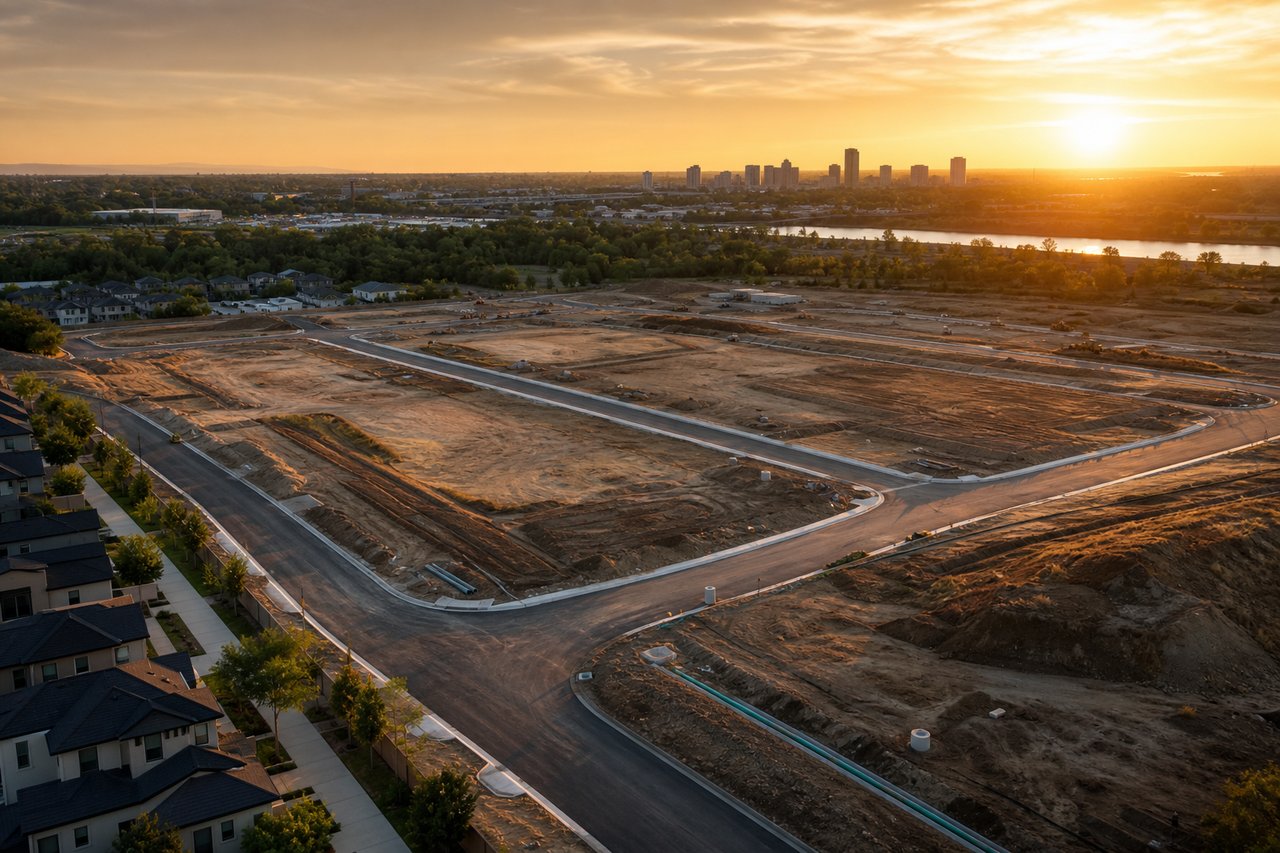
Here is what we know on the ground. Kaiser Permanente broke ground on March 19, 2025, on an 18-acre campus at 365 Railyards Boulevard, near Fifth Street. The facility is scheduled to open in 2029. According to Kaiser, the program includes a 310-bed full-service hospital with a 48-bed intensive-care unit, a 38-bed birthing center, an 8-bed neonatal intensive-care unit, 14 operating rooms, and 70 emergency-room treatment bays. That is not a small outpatient clinic, it is a regional medical destination.
The campus is also designed to replace Kaiser's existing Morse Avenue facility, which Kaiser states does not meet California earthquake-safety standards taking effect in 2030. That context matters for anyone running the real-estate math: some of the projected employment represents a geographic shift within Sacramento, not a pure net addition to the region's workforce.
The employment picture is the key variable
Kaiser projects the completed campus will employ nearly 3,000 healthcare professionals and support staff. That is the single most important number for real-estate purposes, and it deserves honest framing.
Three thousand workers who need to be at a specific address by 7 a.m. are exactly the kind of demand that drives up rental occupancy and condo absorption within a 20-minute commute radius. Nurses, technicians, and administrative staff tend to prioritize proximity to their shift, they do not want a 45-minute commute after a 12-hour day. If even a third of those employees want to live within walking or biking distance of the Railyards, that is a meaningful demand signal for the neighborhoods immediately surrounding the campus.
The broader Railyards redevelopment, of which Kaiser is one anchor, projects 13,563 on-site jobs at buildout across healthcare, hospitality, retail, and professional services. The hospital development alone is modeled to directly support 3,100 jobs and generate a total employment impact of 5,961 jobs throughout Sacramento County. These are modeled economic-impact estimates, not guaranteed hires, but they give a sense of the scale the Railyards is aiming for.
During construction, up to 600 union workers may be on site daily. That is a temporary figure, construction workers do not typically buy condos near a job site, but it does signal economic activity in the corridor right now, in 2026, while the hospital is still three years from opening.
How should buyers and investors think about the Railyards opportunity, and the risks?
I want to be direct here, because I have seen too many clients either over-buy on a development story or dismiss it entirely. The truth sits in between.
Three distinct phases, three different risk profiles
The real-estate story around the Kaiser Railyards campus plays out in three phases, and they carry very different risk profiles:
- Construction period (now through 2028): The hospital is under construction but not yet generating permanent employment. Any price appreciation in this window is driven by expectation, not realized demand. Buyers who move now are pricing in a future that has not arrived. That can work out, but it requires conviction and a longer hold horizon.
- Pre-opening (late 2028 into 2029): Kaiser begins staffing ahead of the opening. This is when rental demand near the Railyards is most likely to firm up, as incoming employees scout housing before their start dates. Investors who are already in position at this point benefit; those trying to buy at this stage may find the story is already priced in.
- Post-opening (2029 and beyond): The hospital is operational, employment is active, and the broader Railyards development is further along. This is when the demand signal is most durable, but also when the most competition exists among buyers who had the same idea.
What the surrounding market looks like right now
The Railyards campus does not exist in a vacuum. It sits within a Sacramento-area market that is already active. For broader context on where Sacramento-area values stand heading into the final quarter of 2026, here is a snapshot of recent area-level medians from aggregated public listing data (trailing approximately 90 days, as of September 2026):
Area Median Sale Price Median Days on Market El Dorado Hills $920,000 45 Folsom $756,500 35 Fair Oaks $622,500 49 Roseville $630,000 19 Granite Bay $1,227,500 54 Rancho Cordova $556,000 31
These are area-level medians, an individual property's value depends on condition, street, build year, and timing. But they illustrate something important: the Sacramento market surrounding the Railyards is not cheap or soft. The hospital opens into a competitive environment. That means the upside from Kaiser's employment base is real, but so is the baseline you are paying today to position for it.
For a broader read on how to interpret market signals in Sacramento right now, my Sacramento Housing Market Guide walks through the indicators I watch most closely.
Which property types stand to benefit most
Rentals and condos within a 10-15 minute commute of the Railyards are the most straightforward beneficiaries of employment-driven demand. Healthcare workers on rotating shifts value walkability and short commutes over square footage, which tends to favor urban units over suburban single-family homes.
Multi-unit properties near the corridor are worth a closer look for investors thinking about this dynamic. My Sacramento Duplex Investment Guide covers the mechanics of small multi-unit investing in Sacramento neighborhoods, the fundamentals apply directly to the Railyards corridor.
Commercial-adjacent residential, properties near the retail, hospitality, and services that will grow up around the hospital, also carries long-term upside, though that story is more speculative and tied to the broader Railyards buildout timeline rather than Kaiser's 2029 opening alone.
The honest qualifier: relocation versus net-new demand
I keep coming back to the Morse Avenue replacement question, because it matters more than most coverage acknowledges. If a significant share of Kaiser's 3,000 projected employees are currently working at Morse Avenue and simply commuting to a new address in 2029, the net housing demand created by the Railyards opening is smaller than the headline number suggests. Some of those workers already live near Morse Avenue in northeast Sacramento. They may choose to stay put rather than move closer to the Railyards.
The real demand driver is any net-new hiring Kaiser does to staff a larger, more capable facility, plus the secondary employment (retail, food service, medical vendors, professional services) that grows up around a major healthcare campus. That secondary layer is where the broader Railyards job projections become relevant.
Your specific opportunity, whether that is a condo purchase, a rental investment, or a primary home, depends on your timeline, your financing, and how you weight these variables. That is exactly the kind of analysis I work through with clients before they write an offer.
If you want to understand where Downtown Sacramento real estate stands relative to the suburbs right now, and whether this is the right moment for your situation, Is Now a Good Time to Buy a House in Sacramento? gives you the broader context.
You can read what my clients say about working through decisions like this on my Zillow profile.
Frequently Asked Questions
Will the Kaiser Railyards Medical Center increase home prices in Downtown Sacramento?
It is likely to add demand pressure near the Railyards corridor, but a direct causal link to price increases is not guaranteed. The clearest mechanism is employment: nearly 3,000 projected permanent jobs create real housing demand, particularly for rentals and condos within a short commute of the campus. How much of that translates into higher prices depends on how much new housing gets built nearby, how many Kaiser employees choose to live close to work, and how the broader Railyards redevelopment unfolds alongside the hospital.
Is buying a condo near the Railyards a good investment before the Kaiser hospital opens in 2029?
Buying ahead of a major employment anchor can work, but you are pricing in a future that has not arrived yet. Buyers who move now are betting on expectation-driven appreciation through 2028, followed by realized demand once the hospital opens and staffing begins. The risk is that the story is already partially priced in, or that new housing supply absorbs the demand before values move significantly. The right answer depends on your hold horizon, financing, and how the specific property pencils out, not on the development story alone.
Which Downtown Sacramento neighborhoods will benefit most from the Kaiser medical center?
Properties closest to 365 Railyards Boulevard, within the Railyards submarket itself and in adjacent neighborhoods with walkable access to the campus, stand to see the most direct demand effect. Areas well-served by transit connecting to the Railyards also benefit, since healthcare workers on rotating shifts value commute reliability. The Railyards submarket is distinct from the historic Downtown core, so proximity to the campus matters more than proximity to Capitol Mall or K Street.
Will Kaiser employees make rents rise near the Railyards?
Concentrated healthcare employment does tend to support rental demand in nearby corridors, and 3,000 projected permanent workers represent a meaningful demand signal. That said, rent levels will also depend on how much new apartment supply comes online as part of the broader Railyards redevelopment, and on how many Kaiser employees are relocated from Morse Avenue versus newly hired. A net-new workforce creates stronger rental pressure than a relocated one.
Is the Railyards medical center already affecting Sacramento real estate, or will the impact come closer to the 2029 opening?
The most significant demand effect will come in the 12-18 months before and after the 2029 opening, when Kaiser begins staffing and new employees start looking for housing. Right now, in September 2026, the project is under construction and the impact is largely anticipatory, some buyers and investors are positioning ahead of that demand, which can itself move prices in speculative submarkets. The honest read is that we are in the early-expectation phase, not the realized-demand phase.
The Kaiser Railyards Medical Center is the most significant employment anchor coming to Downtown Sacramento in a generation, and the real-estate implications are real, but they reward careful analysis over headline enthusiasm. If you are weighing a move or an investment in the Railyards corridor, I am glad to walk through the numbers with you. Schedule a no-pressure conversation here. Or if you want to know what your current Sacramento-area home is worth in this market, I'll put together a personalized valuation, no strings attached.
About Darya Ghomeshi
Darya Ghomeshi is a Sacramento-area REALTOR® and Compass agent who, since 2012, has guided families through move-up and downsizing transitions with a strategist's eye honed by her background in mortgage lending. A Life Member of the Sacramento Association of REALTORS® Master's Club, she pairs deep market knowledge with concierge-level, lifestyle-focused service across El Dorado Hills, Folsom, Roseville, Granite Bay, Fair Oaks, Rancho Cordova, and Downtown Sacramento.
Compass · (916) 840-5300
Equal Housing Opportunity. Darya Ghomeshi is a real estate salesperson licensed by the state of California affiliated with Compass | Compass California II, Inc. | CA DRE# 01527235 | Regulated by the California Department of Real Estate. This article is general information only and is not legal, tax, or financial advice. Confirm your own figures with your closing agent, tax advisor, or lender.